



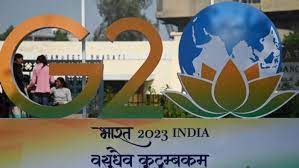
G20 foreign ministers’ meeting is happening against the backdrop of divisions within the grouping of the world’s largest economies over the Ukraine crisis
Two separate statements issued by Britain and Russia have highlighted the challenges confronting India as it hosts a meeting of the G20 foreign ministers against the backdrop of divisions within the grouping of the world’s largest economies over the Ukraine crisis. Hours before UK foreign secretary James Cleverly’s arrival in New Delhi, Britain’s foreign office said he will “continue to call out Russian aggression in Ukraine at a foreign ministers meeting for India’s G20 Presidency and urge partners old and new to work together to tackle the most urgent global challenges”. Cleverly was quoted as describing India as a “hugely important partner to the UK”, and the British statement emphasised that even if the war in Ukraine “were to end today, the effects of the exacerbated food insecurity would still run into 2027”.
And as Russian foreign minister Sergey Lavrov landed in India late on Tuesday night, the foreign ministry in Moscow issued a strongly worded statement that sought to blame the US and its allies for the Ukraine crisis and said their actions had “put the world on the brink of a disaster, provoked a rollback in socio-economic development and seriously aggravated the situation of the poorest countries”.
Without directly referring to what Russia describes as a “special military operation” in Ukraine, the statement contended that the world is “suffering from the cynical revelry of illegal sanctions, the artificial breakup of cross-border supply chains, the imposition of notorious price ceilings and, in effect, from attempts to steal natural resources”. The remarks were a tacit reference to Western sanctions imposed on Russia for the invasion of Ukraine and the recent price cap imposed on Russian oil by the G7.
The two statements effectively captured the divisions India has had to navigate for its G20 presidency and which resulted in the G20 finance ministers meeting in Bengaluru during February 24-25 ending without a joint communique. China and Russia had opposed the inclusion of two paras on the Ukraine war in the draft communique on the grounds that the G20 is a forum for handling economic issues and should not take up geo-political matters.
India was forced to issue a chair’s summary at the conclusion of the G20 finance ministers meeting that retained language from the leaders’ declaration at the last G20 Summit in Bali about most members of the grouping strongly condemning the war in Ukraine while others offered alternate views and different assessments of the situation and sanctions.
Ahead of the G20 foreign ministers meeting, the Indian side has said it will push the consensus reached at the G20 Summit in Indonesia in order to find a way out of the impasse. However, the rigid positions taken by Russia and China on one side and the G7 on the other have heightened concerns that the G20 foreign ministers meeting during March 1-2 too could end without any joint statement.
People familiar with the matter said India’s “considered and balanced” position had contributed to forging the leaders’ declaration at the summit in Bali. “Our endeavour was to reflect the Bali consensus in the G20 finance ministers’ meeting. This was expressed in the chair’s summary and outcome document. The Indian side will continue to push the Bali consensus because this is something all the members had agreed on,” one of the people said.
Diplomatic circles are closely watching a networking reception and dinner to be hosted on March 1 by external affairs minister S Jaishankar for his G20 counterparts and nine guest countries, as it will set the stage for discussions during two sessions the following day. The G7 foreign ministers had boycotted a similar dinner in Indonesia in July 2022 over Russian foreign minister Sergey Lavrov’s presence.
While most of the G20 foreign ministers are expected to be at the dinner on Wednesday night, the foreign ministers of France, Germany and the US were not expected to arrive in time for the event, the people said.
The first session for the G20 foreign ministers meeting on March 2 will focus on strengthening multilateralism and the need for reforms of multilateral bodies such as the UN, food and energy security, and development cooperation. The second session will be devoted to counter-terrorism and emerging threats, global skill mapping, and humanitarian assistance and disaster relief.
External affairs minister S Jaishankar is set to hold a series of bilateral meetings with his counterparts from G20 states and the guest countries, including Lavrov, US secretary of state Antony Blinken and Chinese foreign minister Qin Gang, who is making his first visit to India since his appointment last year.
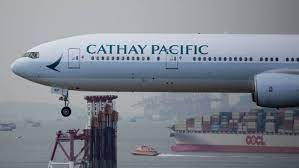
The free flight tickets will be distributed by the Hong Kong’s airlines — Cathay Pacific Airways Ltd and its budget unit HK Express, as well as Hong Kong Airlines Ltd and newcomer Greater Bay Airlines Co. Here’s how to get one
Hong Kong will begin giving away 500,000 airline tickets from Wednesday in a bid to attract visitors and boost its flagging economy, just as it finally drops its compulsory mask-wearing rule.
The tickets will be distributed by the city’s airlines — Cathay Pacific Airways Ltd. and its budget unit HK Express, as well as Hong Kong Airlines Ltd. and newcomer Greater Bay Airlines Co.
Who Gets Them First?
Residents in Thailand, initially. Cathay will hand out 80,000 round-trip tickets in March, starting Wednesday with 17,400 allocated to Thailand. Then it will expand the handouts to Singapore and the Philippines later this week and other nearby Asian countries in the following days.
Hong Kong Airlines will also distribute tickets from Wednesday to residents of Thailand, the Philippines and Vietnam. The carrier hasn’t disclosed how many tickets will be handed out to each country. Greater Bay Airlines will give out tickets to Taiwan in May, followed by South Korea in July. HK Express will join the campaign in April, but it hasn’t disclosed details.
Free tickets will open for mainland Chinese residents in April. Some 80,000 tickets will become available to Hong Kong residents in July, though it is unclear what routes they will be valid for. Authorities also haven’t given a reason for the different timelines and ordering of the handouts.
How to Apply?
Cathay requires people to register on its website and take part in a quiz with three questions. The tickets will be distributed on a first-come-first-serve basis to those who get the answers right. Each applicant can submit one entry only. The winners will be announced on the campaign website on April 3 and receive a confirmation email the same day.
Hong Kong Airlines will also hand out tickets on a first-come-first-serve basis. It has released application details on its campaign page.
Who Is Eligible and Other Terms and Conditions?
Cathay says participants must be at least 18-years-old and each winner can only get one ticket. Winners still need to pay taxes and surcharges, and tickets aren’t refundable, redeemable for cash or transferable. You also can’t upgrade seats using cash or frequent-flier miles.
Do the Tickets Expire?
Yes, according to Cathay. Winners will receive a unique code via email once the redemption period begins. That must then be used within a month to get a ticket.
When booking a ticket, the minimum stay in Hong Kong is two days and the maximum is seven days, Cathay says. Winners are required to travel within nine months of receiving the email containing the redemption code. Rebooking charges stand at HK$1,200 ($150).
Why Is Hong Kong Doing This?
Tourism has traditionally been a major contributor to Hong Kong’s coffers, but three years of Covid restrictions kept the city largely closed off from the outside world and battered its economy, leaving it trailing rival hub Singapore.
Hong Kong’s economy shrank 3.5% in 2022 — the third contraction in four years — and it had a whopping HK$140 billion deficit for fiscal 2022-2023, about three times higher than the government’s original estimate.
The ticket giveaway is part of a “Hello Hong Kong” campaign to promote the city as a tourism center and bring back visitors. Airport Authority Hong Kong purchased the tickets in 2020 as part of a HK$2 billion rescue package for the aviation industry. Click here for more information from the Airport Authority.

In a monochrome saree and a sequined blouse, Shilpa raised the hotness quotient on Instagram with her stunning ethnic look. Check out the pictures here.
Shilpa Shetty is an absolute fashionista. The actor keeps slaying fashion goals like a pro with snippets from her fashion diaries on her Instagram profile on a regular basis. From acing casual looks to showing us how to deck up perfectly in festive attires, to being the boss lady and slaying a formal look in pantsuits, Shilpa can do it all. Shilpa’s red-carpet looks are meant to be bookmarked for all occasions as well. The actor always ensures to make fashion lovers scurry to take notes with her pictures from her fashion photoshoots. Shilpa is known for merging style, comfort and chic vibes in her ensembles and every look from her fashion diaries keep making us drool. Shilpa, a day back, shared a set of pictures of herself on Instagram and painted the social media in shades of monochrome, but with a twist. The actor handpicked a few images from one of her recent fashion photoshoots and shared them on her social media handle. Shilpa played muse to fashion designer JJ Valaya and chose the six yards of grace for the pictures. Shilpa looked stunning as ever as she draped the monochrome striped chiffon saree and teamed it with a contrasting red and golden sequined blouse. The blouse came with a plunging neckline and sleeveless details and complemented her saree perfectly. Shilpa added more oomph to her look with a bright orange belt at the waist, held in place with a golden buckle. Take a look at her ensemble here:

The repolling started at 7 am and will continue till 4 pm.
Repolling is underway in four polling stations in Nagaland on Wednesday, an official said.
The repolling is in being held in New Colony polling station in Zunheboto constituency, Pangti V in Sanis constituency, Jaboka Village in Tizit constituency and Pathso East Wing in Thonoknyu constituency, the official said. The repolling began at 7 am and will continue till 4 pm.
Election officials in the state have not cited any reasons for the repolling in the four polling stations.
The Election Commission (EC) on Tuesday announced repolling in four polling stations out of the 2,291 polling stations across Nagaland that went to polls on Monday.
On the basis of reports submitted by general observers and after taking all material circumstances into account, the commission declared the voting held on Monday at the four polling stations as void, said EC under-secretary Surender Singh.
Polling for 59 assembly seats was held on Monday, while the votes will be counted on Thursday

There is a strong cry for opposition unity at the national level to counter the BJP and Narendra Modi in the 2024 parliamentary elections. Bihar chief minister Nitish Kumar is getting impatient. Last week he said he was waiting for a signal from the Congress to start his mission for opposition unity. But the Congress and Rahul Gandhi don’t seem to be in a hurry. Nobody knows why. Maybe the Congress is waiting for its plenary to get over. But the fact of the matter is that the opposition parties are not in hurry to come together.
When Mamata Banerjee defeated the BJP in the Bengal assembly election, she was projected as the pivot for an anti-BJP grouping but besides a few meetings and visits to Delhi, that did not lead anywhere.
Similarly, when Nitish Kumar broke ranks with the BJP and formed a new government in Bihar with the RJD, the opposition found a new star for the leadership of its anti-Modi front. Again, that did not go far.
The third event, tracked with great admiration and hope, was Rahul Gandhi’s Bharat Jodo Yatra. But opposition leaders were less than enthusiastic. More than two dozen parties were invited to join the Yatra but except for the top leaders from Kashmir, hardly anyone walked with the Congress MP for even a few miles. It was a big snub to Rahul Gandhi.
So, my question is this – is opposition unity a mirage? Or will it really take shape now, given that no party is unscathed by Modi’s juggernaut?
In another time in history, the political climate which defines India today would have been ideal to galvanise opposition parties to come together and launch a massive assault on the Modi government.
Today, “galvanise” does not come to mind as we picture the opposition. The concept of “opposition unity” is wrapped in mystery. The silence is loud and jarring.
The national elections are 15 months away and despite the Modi government facing serious and troubling questions on price rise, unemployment and Adani, opposition leaders cannot be bothered to leave their burrows.
In a similar scenario in the past, in 1967, 1977 and 1989, opposition parties not only banded together but created so much disruption that it brought the Congress down.
In 1967, when the Congress was thought to be invincible, opposition unity did the impossible; the opposition dislodged the party from power in nine states. In 1977, the Congress lost the national elections for the first time and in 1989, the government, which had more than 400 parliamentary seats in Lok Sabha, crashed over the Bofors scandal.
Today, the Congress has been supplanted by the BJP, which nationally commands only 37% votes – far less than the Congress’s best in its heydays (more than 42% vote share). Today there seems to be no urgency in the opposition camp; they just don’t seem to be getting together.
The obvious question is why?
One has to understand that India has changed in the last few years. The basic template of politics has seen a tectonic shift. On one end, when the ruling dispensation has become more ideological, on the other end the opposition has been stripped of its ideology – “de-ideologised”, if you will.
The parties that claim to fight the BJP are not driven by conviction but compulsion. A majority of the parties and their leaders have no national vision or outlook. Earlier, three main opposition political streams – the Jana Sangh and later the BJP, the socialists and the communist parties – all fighting to replace the Congress, had a clearly defined ideological understanding of India. They had a clear vision of India.
If the Jana Sangh and the BJP wanted to create a Hindu Rashtra, the Communists desired a classless society, and the Socialists dreamt of a welfare state.
Despite the differences in their visions for India’s future, all the parties and their leaders had a common conviction that democracy, federalism and the Constitution had to be saved from the Congress party. That consensus is missing today. None of these parties have any idea what the India of their dreams should be. Their primary motivation is to capture power and form governments.
Mamata Banerjee is happy if she is Chief Minister in Bengal, as are Nitish Kumar, KCR (K Chandrasekhar Rao), Arvind Kejriwal, Bhagwant Mann, Jagan Mohan Reddy, Naveen Patnaik, Hemant Soren and MK Stalin, in their states. Akhilesh Yadav and Tejasvi Yadav will be more than satisfied if they could become Chief Minister someday. These leaders are not in politics for higher goals.
Nitish Kumar has no ideological compulsion – he can swim with ease with the BJP as well as the RJD, two ideological extremes. The same is true for Mamata, Stalin, Uddhav Thackeray and HD Kumaraswamy. Each has been with the BJP in the past.
It is ironic that most of the leaders in the opposition today are sons and daughters of legendary leaders who had clear ideological positions, who struggled to attain high positions.
Mulayam Singh Yadav, Lalu Prasad Yadav, Bala Saheb Thackeray, YS Rajasekhara Reddy, Biju Patnaik, MK Karunanidhi, Shibu Soren, Deve Gowda, Farooq Abdullah and Mufti Mohammad Sayed were stalwarts in their own right but their sons and daughters attained fame and power on the platter. They did not have to fight to reach the top. They are princelings. Ideology is not their forte and power is the driving force. If their parents had not been in politics and sold watches, they would have been happily doing that too. Since power and not conviction defines their politics, they can align with any group and party which can share a slice of power with them.
In their eyes, Modi and Rahul Gandhi both are the same. Whosoever offers them a better bargain and a greater share in power, will be their friend. In their assessment, if they realise that being with Modi can save them from the vice grip of government agencies, or they can be cabinet ministers at the centre or can run their governments smoothly in states, they will dump the notion of opposition unity and embrace the BJP, forgetting all political differences.
Rumours about Mayawati going soft on the Modi government has some substance. Mamata Banerjee, who was hostile to Modi, has suddenly mellowed down. This happened not without any reason. Naveen Patnaik is happy in Odisha as along as the Centre does not disturb him. So is Jagan Mohan Reddy in Andhra Pradesh. KCR and Kejriwal know that they have to fight the BJP if they have to survive in their states but in the future, they are always open to compromise. Kumaraswamy and Uddhav Thackeray have shared power with the BJP in the past. Sharad Pawar helped save the BJP government in Maharashtra in 2014. Mehbooba Mufti was Chief Minister with support from the BJP.
In this game, the Congress is the curious case. It can’t go with the BJP but is not in a position to offer anything substantial to opposition parties, except for a few seats in a few states.
The Congress promises to offer an anti-BJP narrative, a counter to Hindutva, but has no structured ideology. Rahul Gandhi has but a few stray ideas. The Congress talks about democracy, constitutionalism, and federalism, but its record on these issues is iffy. Besides, the Congress is not sure the opposition parties won’t ditch it if the BJP were to offer a better bargain or if government agencies got into the picture.
In 1977 and 1989, the Jansangh/BJP, communists and socialists joined hands despite deep differences because they had a basic understanding of universal values. There was consensus on basic issues. Democracy, Constitutionalism and federalism were not open to compromise. Power was important but not the only incentive. Politics of conviction was important. Leaders were born and raised in a value system that was the product of the freedom movement.
In India, the new generation of leaders has a disconnect with the freedom movement. Modi’s BJP is not the same it used to be during Atal-Advani’s (Atal Behari Vajpayee and LK Advani) time. For today’s BJP, power is everything and it will stop at nothing to get it.
On the other hand, Rahul Gandhi is neither Sonia Gandhi nor Rajiv Gandhi, who had a different understanding of party politics. He is fighting for his own survival and is suspicious of his own party colleagues. Modi and Rahul Gandhi are the two main players, and they are nothing like their illustrious predecessors. For them, political opponents are not rivals but enemies. They have changed the rules of the game, so the grammar of political engagement has also changed.
Opposition unity has grown more complicated than before, and if we try to understand its mechanism through the old prism, it will be a mistake.

“Are you kidding me? In what world is this okay and allowed?” Alia Bhatt’s question, unfortunately, has a non-palatable answer.
In the social media-verse where it is all about getting clicks, reels and instant gratification, privacy is collateral damage. The word ‘privacy’ is not in the lexicon of that entitled bunch called the paparazzi.
Boundaries have been crossed quicker than a Suryakumar Yadav’s blink-and-miss hit to the fence, and everything is fine, until it’s not.
What happened with Alia is not just an invasion of her privacy but also terrifying. Imagine relaxing in the safe space of your own living room and realising, suddenly, that you are exposed, being watched. “I was at my house having a perfectly normal afternoon sitting in my living room when I felt something watching me… I looked up and saw two men on the terrace of my neighbouring building with a camera right at me!” she posted, clearly shaken. Who would not be?
25 years after the British paparazzi chased Lady Diana to her death, their Indian versions have come into their own and that is not a compliment.
They are bloodthirsty. They are relentless. They may even be unhinged in the hunt for “exclusive” shots. Their disdain for an individual’s privacy is remarkable.
Alia has a baby daughter at home, and she rightfully shields her from the cameras. When does the pursuit become an obsession, crossing the line? What next? Celebrity home invasion using our cameras? They are closing in and, some may argue, have crossed into stalker territory.
It is not just the camera. On most days, only a phone will do. Even for a so-called ‘influencer’ or an ordinary citizen on the street, celebrities are fair game. Click, upload, post. Wait for the likes.
Even ChatGPT will have no answer for this interplay of roles – a fan or a camera person one moment and a stalker the next. Social media, the world where non-entities become celebrities, is a gift that keeps on giving.
When cricketer Prithvi Shaw reportedly refused a selfie with a social media influencer, she took it so badly that not only was the cricketer manhandled by her group but they also attacked his car with a baseball bat. Also over a selfie, singer Sonu Nigam was pushed by a man on stage during a show.
In India, privacy debates have by and large centred around data protection, and individuals are left to fight their own battles. The lines may be blurred but there are some unwritten rules. Children, for one. Anushka Sharma says repeated requests to not click her and cricketer Virat Kohli’s daughter have gone unheard and ignored. The paparazzi think nothing of zooming in on little Vamika in her mother’s arms, watching her father play. Much like Alia, this couple was also clicked unguarded at home. But two years after they called it out, the rot is spreading.
There are some like Kareena Kapoor who pop up on our timelines almost daily and clearly don’t mind the cameras. Quite a few actors solicit the attention. Their PR agencies share “tip-offs” and the paparazzi just happen to catch them outside gyms, salons, and the airport.
But how does the search for content lead to someone’s living room?
If there is even a fraction of voyeurism involved in all this – as it certainly appears to be – then let’s just call it like it is. They are not even the paparazzi, just a bunch of sleazy men.
Many Bollywood stars have come out in support of Alia and have slammed the publication that posted the photos.
In the name of content, social media has taken tabloid journalism and shredded it even more. Anyone with a smartphone and ambition can start chasing stars.
But the buck doesn’t stop with the paparazzi. Editors who sanction these photos and allow them to be posted cannot shrug off responsibility.
Consent is absent and silence is implied consent. Tomayto, tomahto for paps.
Truth be told, Bollywood itself has not championed the concept of consent, unless the impact is personal.
Sushmita Sen isn’t wrong when she says privacy is a myth. But look around you, it is not just the celebs who suffer intrusions into their daily lives. Standing in a queue, whether at the airport or at a supermarket, people and their armpits breath down your neck, tech companies mine personal data as though it is their right, and personal space – er, what is that?
Privacy, then, is subjective. It depends on how badly we want it. For now, it seems, not badly enough. Will the noise over Alia’s privacy violation inspire a course correction? I wouldn’t hold my breath.
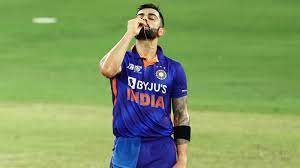
Virat Kohli has been a pillar of India’s home domination ever since he hit the international cricket scene in 2008
When India takes to the field against Australia during the third Test at Indore, it will be a special occasion for hosts’ star batter Virat Kohli, who will be playing his 200th international match at home. India will square off against Australia at Indore from Wednesday onwards. India is 2-0 up in the four-match series which has seen the Indian spin trio of Ravichandran Ashwin, Ravindra Jadeja and Axar Patel being the brightest stars for the hosts. Virat has been a pillar of India’s home domination ever since he hit the international cricket scene in 2008. In 199 matches at home so far, he has scored 10,829 runs in 221 innings at an average of 58.22. He has scored 34 centuries and 51 half-centuries at home, with the best score of 254*.
However this time around, the pressure will be on Virat, who has been searching for big runs in the longer format since 2020. His numbers for 2020 (116 runs in three matches at an average of 19.33 with one fifty in six innings), 2021 (536 runs in 11 matches at an average of 28.21 with four fifties in 19 innings) and 2022 (265 in six matches at an average of 26.50 with one fifty in 11 innings) are too underwhelming for someone of his stature.
However, Virat looked in complete control during his short innings of 44 and 20 runs in both innings of the second Test in Delhi and Team India would hope that their biggest batting star will end his three-year-long drought of big runs, which will also boost India’s chances to qualify for ICC World Test Championship finals, to be played in London from June 7 onwards.
Virat has managed 76 runs in three innings in this series at an average of 25.33.
India will also aim to overcome the Australian challenge at Indore to make it 3-0 and secure qualification for the WTC final. Skipper Rohit Sharma also believes in focusing on the present and taking on the Aussie challenge at Indore.
“It will be a great achievement for us [to reach the WTC final], but we know that we need to cross that final hurdle, and for that, we need to win the next game as well, so the focus is on this Test, how we can win this game, and not look too far ahead, because after this game we have got one more Test match to be played, and then after that, there are two months of IPL,” Rohit said as quoted by ESPNCricinfo.
“There is a lot of time to think about the final, but right now it is very important for us to focus on this one and see how we can turn it around and win this game as well, because in the last game, we were put under pressure for sure, we can expect the same here as well, so we need to be ready for that,” added Rohit.
Regarding whether KL Rahul or Shubman Gill will play in the match, Rohit said that things are not decided yet.
“As far as Gill and KL both are concerned, they train and practice [for long hours] before any game…As far as our 11 is concerned, we have not finalised on it. I would like to do it at the toss and I prefer to be announced at that point in time,” Rohit Sharma further said.
He also pointed out that KL Rahul being removed from vice-captaincy is not a big thing and he was given the post only because the team lacked veterans.
“All 17 players in the team has a chance. The team will back those who are talented. Stripping vice-captaincy doesn’t mean anything big. He was made the vice-captain because maybe there was not many experienced players at that time. It is not a big thing,” Rohit said.
KL had a disappointing 2022 with the bat and has not started 2023 very brightly either. On the other hand, Shubman Gill is in red-hot form in white-ball cricket, having hit a double ton against New Zealand this year.
Overall in 30 matches last year, KL aggregated 822 runs at an average of 25.68, with nine half-centuries.
This year, he has scored a paltry 38 runs in three Test innings.
Overall, he has totalled just 148 runs across five international matches at an average of 29.60, with one half-century and the best score of 64*.
On the other hand, Australia will be aiming that they win the rest of two matches and will be playing for their respect, having lost their chance to reclaim the Border-Gavaskar Trophy.
For that they will need their Steve Smith, leading in absence of Pat Cummins, who is in Australia due to family health issues, to fire with the bat.
The 33-year-old boasts an exemplary batting record as captain, with 3793 runs at 67.73 with 15 hundreds, three of which came on his last Test trip to India in 2017.
Encouraged by his success in the past, Smith is hopeful that the leadership role can help him regain his form with the bat, with him having registered scores of 37, 25*, 0 and 9 in the series thus far.
Smith expressed his frustration with his dismissals in Delhi Test while speaking to media.
“I have played, what, 95 Test matches (94) and I do not think there has been too many times I have walked off the field and I have gone, ‘what the hell am I doing?'” Smith told reporters on Tuesday.
“I was pretty angry. There has not been too many times in my career where I have actually come off and just been bedazzled by what I’ve done. It wasn’t my finest moment. Certainly, something to learn from, I am still learning as well. It was not the way I wanted to play, particularly when I had the field set for all of us – they had the field out,” said the Australia captain.
Smith conceded that the visitors faltered as a result of their hasty approach, something he plans to remedy in the remaining two Tests.
“We probably just rushed things a little bit and it is something we will talk about …when we have got them on the ropes, we can slow things down. We do not have to play at such a high tempo and risky tempo. Because we had them where we wanted them, we had men out and the ability to get off strike. We just rushed it. We have got to learn to adapt a little bit better,” he added.
Listen to the latest songs, only on JioSaavn.com
While Australia has lost pacer Josh Hazlewood and veteran opener David Warner for the rest of the series due to injuries, they will be boosted by the returns of quick Mitchell Starc and all-rounder Cameron Green, who sustained finger injuries during the home series against South Africa and missed the first two Tests against India.
India’s Test squad for the third and fourth Test against Australia: Rohit Sharma (Captain), K L Rahul, Shubman Gill, Cheteshwar Pujara, Virat Kohli, KS Bharat (wk), Ishan Kishan (wk), Ravichandran Ashwin, Axar Patel, Kuldeep Yadav, Ravindra Jadeja, Mohd. Shami, Mohd. Siraj, Shreyas Iyer, Suryakumar Yadav, Umesh Yadav and Jaydev Unadkat.
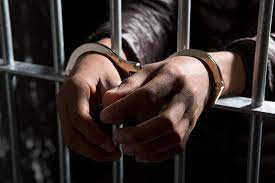
Saharat Sawangjaeng underwent a series of surgeries that altered his facial features beyond recognition.
In a clever attempt to evade police, a drug dealer in Thailand underwent several extensive plastic surgeries to look like a Korean man. However, his attempts were futile as he was caught last week at an apartment in Bangkok. The 25-year-old man has now been charged with importing and possessing ecstasy (MDMA), a class one drug.
According to a BBC report, Saharat Sawangjaeng was trying to hide his true identity by using an alias Seong Jimin, a Korean name. He also underwent a series of surgeries that altered his facial features beyond recognition.
However, the cops still tracked him down by tracing the distribution of ecstasy to other sellers and buyers in Bangkok. Witnesses, meanwhile, described him as a ”handsome Korean man” to the police. Thai media reported that the police were shocked when they arrived to arrest Sawangjaeng as ”none of his original face was left.”
Upon his arrest, the man revealed that he wanted “to start a new life.” He added, “I am bored of Thailand.” He also admitted to buying the drugs with Bitcoin on the Dark Web and then selling them to customers in and around Bangkok.
Notably, he had been arrested at least three times prior to his recent apprehension. One time, the police found 290 ecstasy pills and 2kg of narcotics in liquid form in his possession. However, he was able to escape detention, every time.
Police Major-General Theeradej Thammasutee called Sawangjaeng “one of the main causes of Bangkok’s MDMA epidemic”, reported The Straits Times.
Mr Thammasutee added, “He is a drug lord importing MDMA from Europe at just 25 years old. We believe there are more suspects in foreign countries. We will continue our investigation.”
The Thai government has been cracking down heavily on crimes like drug trafficking and use in recent years.
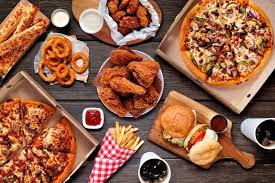
People of lesser means have few food buying choices where they live, while supermarkets seem to crop up where markets already thrive. Can we change that?
If you reside further than one mile away from a grocery store, you live in a food desert.
A food desert is an area lacking access to fresh and healthy foods and is often found in areas that are predominantly low income. They disproportionately affect people of color.
“If you live between 18th and 30th St. in Wilmington, there is no grocery store there,” said Jamilah Abdullah, a founder of Free Food For All, an organization in the U.S. state of Delaware that serves free food to underserved communities. “It isn’t that big of a deal if you have a car, but it is for walkers and bus riders.”
New food markets seem to spring up in areas where there is an influx of more affluent people. “It seems like new developments are being catered to those who are moving into the area, rather than those who actually live in the area,” Abdullah said.
Supermarkets pop up where they aren’t needed.
According to a study done by the U.S. Department of Agriculture, there are 6,500 food deserts across the U.S., yet the priority for new developments seems to be in areas where food markets already exist.
In Greenville, a wealthy neighborhood of Wilmington, Delaware, the upscale grocery store and cafe Wegmans recently opened. If you drive five minutes in either direction, a Walmart and Janssen’s markets can also be found, causing some to question the necessity of this new addition.
The Wilmington nonprofit organization Planting to Feed, Inc. has been trying to provide better food choices in neighborhoods that lack food markets by installing community refrigerators. These are similar to what has become know as “little free libraries,” small installations that allow people to drop off and pick up food for free. Three are located in Wilmington.
“Whenever I check them, they’re empty.” Abdullah said, highlighting their popularity.
Not all food deserts are located inside cities.
No shortage of fast food establishments
Natalie Kincaid lives in Green Meadows in the small town of Smyrna, Delaware. Kincaid must pass more than five fast food establishments before reaching her nearest grocery store. “I would turn to fast food because that’s what would be closer,” Kincaid said. “Since it’s closer, I’ll go to Royal Farms or McDonald’s; like I had McDonald’s today. I can walk to the fast food restaurant and be there faster than I would be to the grocery store.”
Food deserts exist around the world. A 2021 study by Fidelia Dake from Open Research Africa found that in Windhoek, Namibia supermarkets were located in high-income areas, and budget stores, that normally lack fresh produce, were located in low-income areas. Further research in South Africa, Ghana and Tanzania has shown that these food deserts are emerging there as well.
Where people lack vehicles in towns where grocery stores are far and few, fast food and convenience stores are the only option.
Kincaid said distance affects what kind of food she purchases and how often she purchases food. She visits her local grocery story, but not often. “I don’t have a ride, like I don’t have the transportation that I need, so not frequently,” Kincaid said.
Kincaid’s neighborhood has no bus stops, and to get to the grocery store entails walking alongside, and crossing, a busy road.
“I would like to see the change of putting grocery stores closer to my neighborhood because it is more beneficial to the people who don’t have the transportation,” Kincaid said.
Abdullah said that to find solutions it is important to start conversations about food deserts.
“For example, digital artists can make signs and posters,” Abdullah said. “If you have a car, you can deliver a meal to someone or look up your local food pantry to give a helping hand. It’s always about engagement on that end.”
