


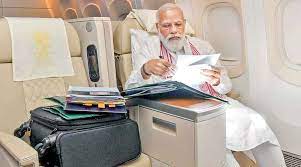
Can PM Modi reform bureaucracy for New India?
While PM Modi and his ministers spend their weekends touring various parts of country, Indian bureaucracy with some exceptions is still playing pass the file.
The Indian armed forces, their valor and welfare are very close to Prime Minister Narendra Modi’s heart. Since he took over as PM in 2014, he has made it a point to spend his Diwali with the armed forces deployed on the Indian borders and personally feeding “ladoos” to the jawans from frozen heights of Siachen Glacier to super-heated Thar desert at Longewala, the site of famous 1971 tank battle with Pakistan. Before he won the 2014 Lok Sabha elections, he announced at the famous ex-servicemen’s rally in Rewari on September 15, 2013, that he would implement one rank one pension if elected to power. Despite contradictions between Finance and Defence Ministry, the OROP scheme was implemented by Defence Minister Manohar Parrikar on the basis of principles as defined in the letter to the three service chiefs on November 7, 2015. The Supreme Court upheld the scheme on March 16, 2022, and asked the government to pay arrears within three months. But this deadline was extended by the Defence Ministry’s Ex-Servicemen Department thrice. A year later on March 20, 2023, the same Supreme Court intervened and directed the Defence Ministry to pay the arrears by February 28, 2024, in three equal installments. Due to procedural delays on part of Defence Ministry bureaucrats, the entire episode made the apex court a savior for ex-servicemen and put the Modi government, which had implemented the scheme after several decades of political wrangling, in the dock. The bureaucratic delays and poor oversight over OROP arrears left PM Modi most upset and he let his unhappiness be conveyed to his Cabinet and to the errant Defence Ministry officials. The bureaucratic delay over OROP arrears clearly also worked against the BJP in the November 2022 Assembly elections in Himachal Pradesh, where ex-serviceman reside in large numbers. The difference between BJP and the Congress was merely 0.9 per cent of popular vote and had the arrears been paid in time, the electoral result perhaps would have been different. After being in power for nearly nine years, the Indian bureaucracy still is not up to speed with PM Modi’s decision making and implementation on ground. To date PM Modi follows a punishing 14-hour work schedule sitting in his office till 11 pm in the night clearing files and holding key meetings. He and his key ministers like Defence Minister Rajnath Singh, Home Minister Amit Shah, Finance Minister Nirmala Sitharaman, External Affairs Minister S Jaishankar, Road and Highways Minister Nitin Gadkari spend their entire weekends outside the Capital, reaching out to the people from Arunachal Pradesh to Gujarat, from Srinagar to Kanyakumari. Fact is that there is no fun in becoming a minister in Modi’s Cabinet as the days of projecting pelf and power are over with continuous grind and accountability with PM himself setting the lofty standards.
While PM Modi and his Cabinet stand accountable, the Indian bureaucracy with exception of a significant few are still on a work to rule basis with focus on procedure not productivity. In spite of the Modi government clearly defining its short term and long-term national objectives, these arrogant legatees of the British colonial rule work for individual institutions they represent not towards the larger national interest. Even a Home Minister as strong and as determined as Amit Shah sounds frustrated when his developmental plans on Jammu and Kashmir are met with bureaucratic hurdles at the highest UT administration levels. Has the Modi government listened to the Indian bureaucracy and the vested interest within the security and diplomatic apparatus, Article 370 and 35 A would never have been abrogated and the country would have continued playing a daily slanging match with Pakistan with India’s global adversaries adding fuel to fire. The same holds good for China as it was PM Modi who decided to take on the expansionist Middle Kingdom by the horns at Doklam in 2017 and in East Ladakh in 2020. The role played by the Modi government and its national security planners in injecting cement into the backbone of national security will come out in flying colors when war history of the past decade is recorded for posterity. Even as recently as Baisakhi day, a top paramilitary official wanted orders in writing on deployment in Punjab from the Home Ministry rather than do on his own initiative as self-preservation is a key bureaucratic skill. After all the bureaucratic focus is on completion of file not on wastage of public money and resources or the national security response.
While PM Modi ad nauseam talks about “Atmanirbhar Bharat” to create a military-industrial complex for the new rising India, the main military-civilian bureaucratic players in this plan are still playing in their own silos as if there was no urgency despite a neighborhood global superpower defining India as a key adversary. The focus is on meetings not on results with every bureaucrat ready with advice of the ministry he or she represents. In diplomatic parlance, these are called TP or talking points.
In his speech to mark 75th year of Indian Independence, PM Modi talked about decolonization of Indian mind as part of “Paanch Prans or five commitments” to make India a developed country by 2047. The first step towards this should be the decolonization of Indian bureaucracy as they are the interface with the public from gram panchayat level to the PMO. The British Civil Services system needs to be taken down as it creates divisions within on the basis of the three letters after the name of the serving bureaucrat. New India needs a new administrative system based on contemporary issues facing the country and a new syllabus and domain knowledge. It needs an administration which is grounded in India not merely doing a job for pay, perks and a house in posh Lutyens Delhi. A bureaucrat living in the prime residential areas of the national capital and state capitals with children studying or settled abroad cannot be expected to be in touch with real India. While PM Modi is put to sword by the electorate every six months in state assembly elections every five years in a Lok Sabha election, a bureaucrat survives for 30 years and more on the basis of a single exam. Will the PM hold Indian bureaucracy accountable when he addresses them on April 21, 2023, Civil Services Day.

